The Rise of AI Personal Assistants: What Can They Really Do? - Toptech Global

The Rise of AI Personal Assistants: What Can They Really Do?

The Rise of AI Personal Assistants
What Can They Really Do?

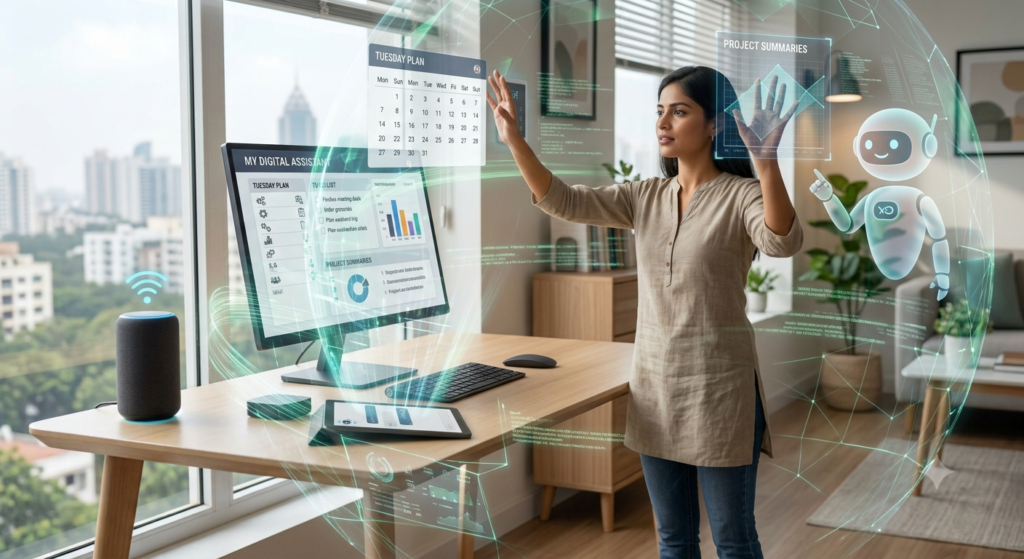
Imagine having a digital helper that can answer questions, organize information, explain complicated topics, help plan your day, and assist with everyday tasks all through a simple conversation. That idea is no longer limited to science fiction. AI personal assistants are becoming increasingly useful in everyday life, changing how people interact with technology. Unlike traditional digital assistants that mainly respond to predefined commands, modern AI assistants can understand natural language and handle more detailed requests. They can help users brainstorm ideas, summarize information, create drafts, organize tasks, learn new subjects, and solve everyday problems.
But what can they really do, and where are their limitations? What Are AI Personal Assistants?
AI personal assistants are software systems that use artificial intelligence to understand user requests and provide information or assistance. A traditional digital assistant might respond to a command such as “set an alarm for 7 AM.” An AI personal assistant can handle more open ended requests, such as: “Help me organize my morning before an important meeting.” The assistant could suggest a practical sequence of tasks, prepare a checklist, or help the user think through what needs to be completed. The exact capabilities depend on the AI system, available tools, and permissions given by the user.

One of the simplest uses of an AI assistant is getting information.

Users can ask questions about technology, education, travel, business, cooking, or everyday subjects. They can also request explanations at different levels.

For example, instead of asking for a technical definition, someone could say:

“Explain cloud computing as if I am completely new to technology.”

The assistant can then provide a simpler explanation and answer follow up questions.

AI assistants can support everyday productivity by helping users organize information and tasks.

They can assist with:
To do lists, Meeting preparation, Brainstorming
, Planning projects, Creating checklists, Summarizing notes, Drafting messages, Organizing ideas

For example, a user preparing for a presentation could ask the assistant to turn rough notes into a logical presentation structure.

AI personal assistants can also help people write more efficiently.

They can draft or improve emails, reports, social media posts, descriptions, applications, and other types of content.

A user can provide a rough idea and ask the assistant to make it clearer or more professional.

However, users should review AI-generated writing before publishing or sending it, especially when the content contains important facts or personal information.

AI assistants can act as interactive learning companions.

Instead of simply reading a definition, students can ask follow-up questions, request examples, or practice a subject through quizzes.

For example:

“Teach me the basics of accounting and then give me five practice questions.”

This creates a more interactive learning experience.

AI can also adjust explanations based on the user’s questions, making it useful for people who prefer learning through conversation.

Planning is another area where AI assistants can be useful.

A person planning a trip might ask for help creating an itinerary based on the number of days, interests, budget, and preferred pace.

Someone organizing a personal project could ask for a step-by-step plan and a checklist.

The quality of the result depends heavily on the information provided. The more relevant context users give, the more useful the assistant’s suggestions can become.

AI Assistants Can Become More Context-Aware

A major difference between modern AI assistants and older software is their ability to work with conversational context. For example, a user might ask: “What are some easy dinner ideas?” Then follow up with: “Give me vegetarian options.” Then: “Which one can I prepare in under 30 minutes?” The assistant can use the earlier conversation to understand what “which one” refers to. This makes interactions feel more natural because users do not have to repeat every detail in every message. What AI Personal Assistants Cannot Reliably Do Despite their capabilities, AI assistants are not perfect. They can sometimes misunderstand a request, provide outdated information, or generate an incorrect answer that sounds convincing. They may also lack access to private or real time information unless appropriate tools or connections are available. For important decisions involving finances, health, law, employment, or other high impact matters, users should verify information with reliable sources or qualified professionals. AI should be treated as an assistants not an unquestionable authority. Tips for Getting Better Results From an AI Assistant Be Specific Instead of saying: “Help me study.” Try: “Create a seven days study plan for basic accounting with one hour of study each evening.” Specific instructions usually produce more useful results. Provide Context Mention relevant information such as your goal, audience, preferred format, deadline, or experience level. Ask for Refinements You do not always need to write a perfect request the first time. Ask the assistant to shorten, simplify, reorganize, or expand the response. Verify Important Information Check important facts before relying on them, particularly when mistakes could have serious consequences. Protect Personal Information Avoid sharing passwords, financial credentials, highly sensitive personal information, or other information that does not need to be provided.
The Future of AI Personal Assistants AI personal assistants are likely to become more closely connected with the digital tools people already use. Future assistants may be able to coordinate information across calendars, documents, communication platforms, shopping services, smart-home systems, and other applications, depending on the permissions and integrations available. This could shift AI assistants from systems that simply answer questions to tools that help users complete multi step tasks. For example, instead of asking for individual pieces of information, a user might describe a goal and have an assistant help break it into manageable steps. The challenge will be balancing convenience with privacy, accuracy, transparency, and user control. Frequently Asked Questions What is an AI personal assistant? An AI personal assistant is software that uses artificial intelligence to understand natural languages requests and help users with information, planning, writing, learning, and other digital tasks. Are AI personal assistants free? Some AI assistants offer free versions, while others provide additional features through paid plans. Availability and pricing vary between services. Can AI assistants replace humans? AI assistants can automate certain tasks, but they do not replace human judgment, experience, creativity, responsibility, or professional expertise in every situation. Are AI personal assistants accurate? They can be useful but are not always accurate. Important information should be independently verified. How can I use an AI assistant for productivity? You can use one to organize tasks, create checklists, summarize information, brainstorm ideas, prepare for meetings, and structure projects.
Conclusion The rise of AI personal assistants is changing how people interact with technology. Instead of relying only on fixed commands and individual applications, users can communicate with AI in natural language and receive help across a growing range of activities. From learning and writing to planning and productivity, AI assistants can save time and make digital tasks easier. At the same time, users need to understand their limitations, verify important information, and protect their personal data. The future of AI personal assistants will likely depend not only on how intelligent they become, but also on how responsibly and conveniently they can work alongside people.

Leave a Comment

Your email address will not be published. Required fields are marked *