
How AI Is Transforming Robotics: From Repetitive Machines to Intelligent Partners
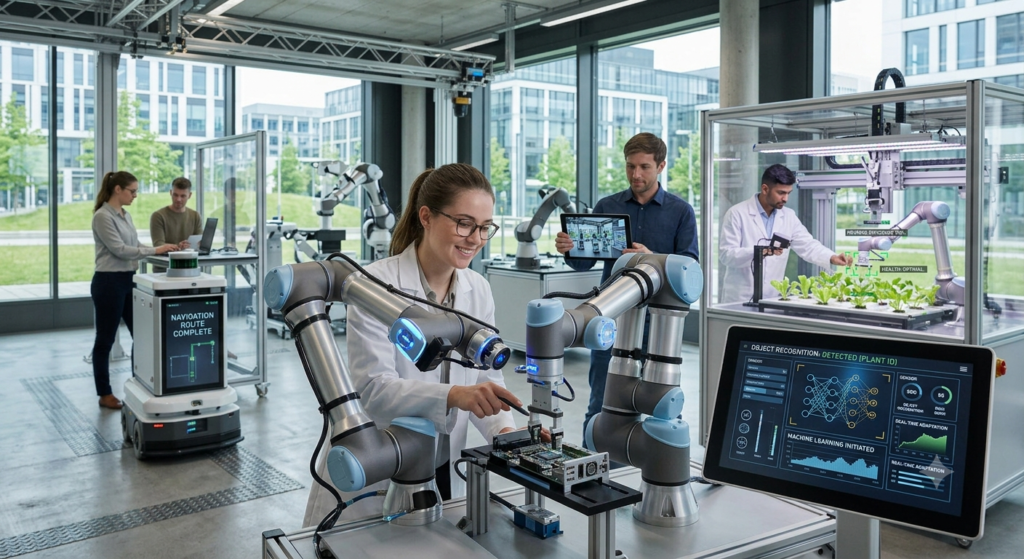
Robots Meet AI: A Perfect Partnership
What Makes Robots Smarter with AI?
- Object Recognition: AI-powered computer vision helps robots identify objects even when they’re out of place or partially hidden. For example, a warehouse robot can tell the difference between boxes, shelves, and people, making navigation safer and more efficient.
- Learning from Data: Robots can collect data on their performance and environment, then use machine learning to improve over time. This flexibility means they can adapt to new tasks or changing conditions without needing every step pre-programmed.
- Understanding Speech and Instructions: Instead of rigid commands, AI allows robots to comprehend natural language instructions. You could say, “Move the package from the table to storage,” and the robot would understand and act accordingly—combining language, vision, and navigation skills seamlessly.
AI and Robotics: Changing the Game in Key Industries
Industry 4.0 Unleashed: Man, Machine, and Manufacturing
Robotic arms have long handled repetitive tasks like assembly and welding. With AI, they get smarter—identifying parts that aren’t perfectly aligned and spotting defects during quality control, reducing the need for human intervention.
As e-commerce grows, AI-driven robots keep supply chains running smoothly by understanding layouts, avoiding obstacles, and finding alternate routes if paths are blocked. This lets human workers focus on tasks requiring creativity and judgment.
In medical settings, precision is crucial. AI assists robotic systems with image analysis and planning, supporting surgeons and hospital logistics. Although these robots aren’t replacing doctors anytime soon, they’re enhancing care and efficiency under professional oversight.
Farming is unpredictable, making it a great fit for AI-robot collaboration. Robots can monitor crops, identify weeds, inspect plants, and assist with harvesting, using computer vision to distinguish healthy plants from unhealthy ones and navigate complex fields.
From robotic vacuums that map your living room to future assistants that might combine multiple tasks, AI is making household robots more adaptable and aware of their environment. Practical concerns like cost and safety will guide how quickly these helpers become everyday fixtures.
The Vital Role of Sensors
Why Combine AI and Robotics?
- Greater Automation: Robots can handle physical tasks while AI manages decision-making and adaptation.
- Improved Efficiency: Automated systems work consistently and around the clock.
- Better Safety: Robots can operate in environments hazardous to humans.
- More Flexibility: AI allows robots to respond to changing conditions instead of rigidly following pre-set rules.
- Less Repetitive Work: Humans can focus on creative, strategic, or supervisory roles.
Challenges on the Horizon
- Safety: Machines interacting with people must react reliably to unexpected events.
- Cost: Advanced robots need investment in hardware, software, and training.
- Privacy: Cameras and microphones raise concerns about data collection and use.
- Reliability: AI mistakes can have physical consequences.
- Workforce Changes: Automation shifts job roles and skill requirements.
Looking Ahead: Humans and Robots, Together
The future of robotics isn’t about robots replacing people but about collaboration. Robots will increasingly take on repetitive or physically demanding tasks, freeing humans to bring creativity, judgement, and empathy to the table.
Thanks to innovations in AI, sensors, and cloud computing, robots will become more versatile, capable of navigating varied environments and tasks. But intelligence alone won’t suffice safety, ethics, privacy, and human oversight will be just as crucial.
Final Thoughts
The marriage of AI and robotics is ushering in a new era of intelligent machines that don’t just follow instructions but understand and adapt to the world. As these technologies advance, we’re poised to see robots become valuable partners across industries and daily life shaping a future where human ingenuity and machine precision work hand in hand.
Stay curious and tuned in for more insights on this fascinating journey next week!